
Umeå Institute of Design
Connecting frontline healthcare workers with telehealth specialists to ease the strain on understaffed hospitals.
Team: Anja Bedrick, Chenxi Li, Henning Birgersson, Irma Svenningsson
UX
UI
Service Design
Design Ethnography
Design for Healthcare
Co-Creation
UX field research
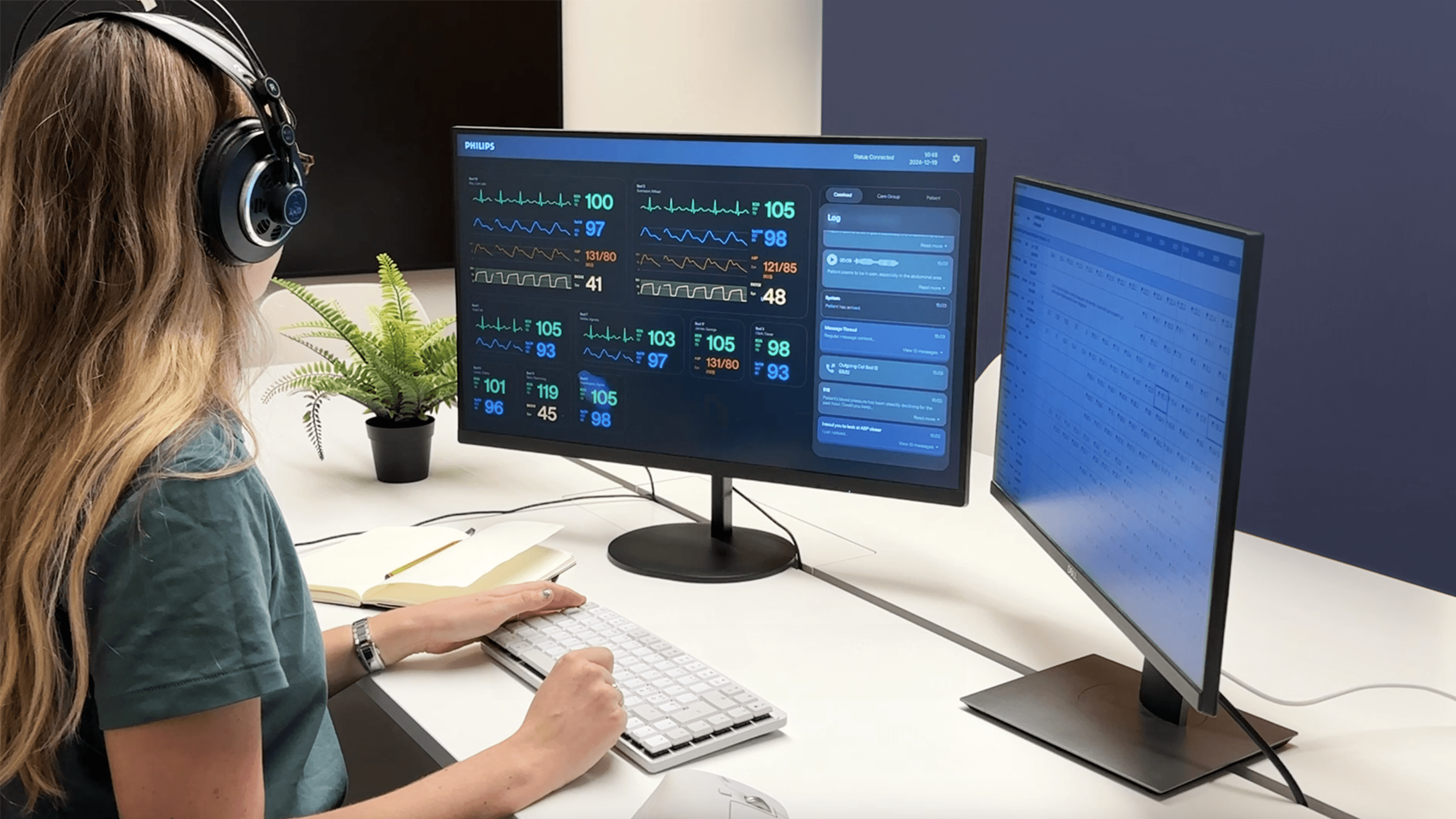
At a Glance
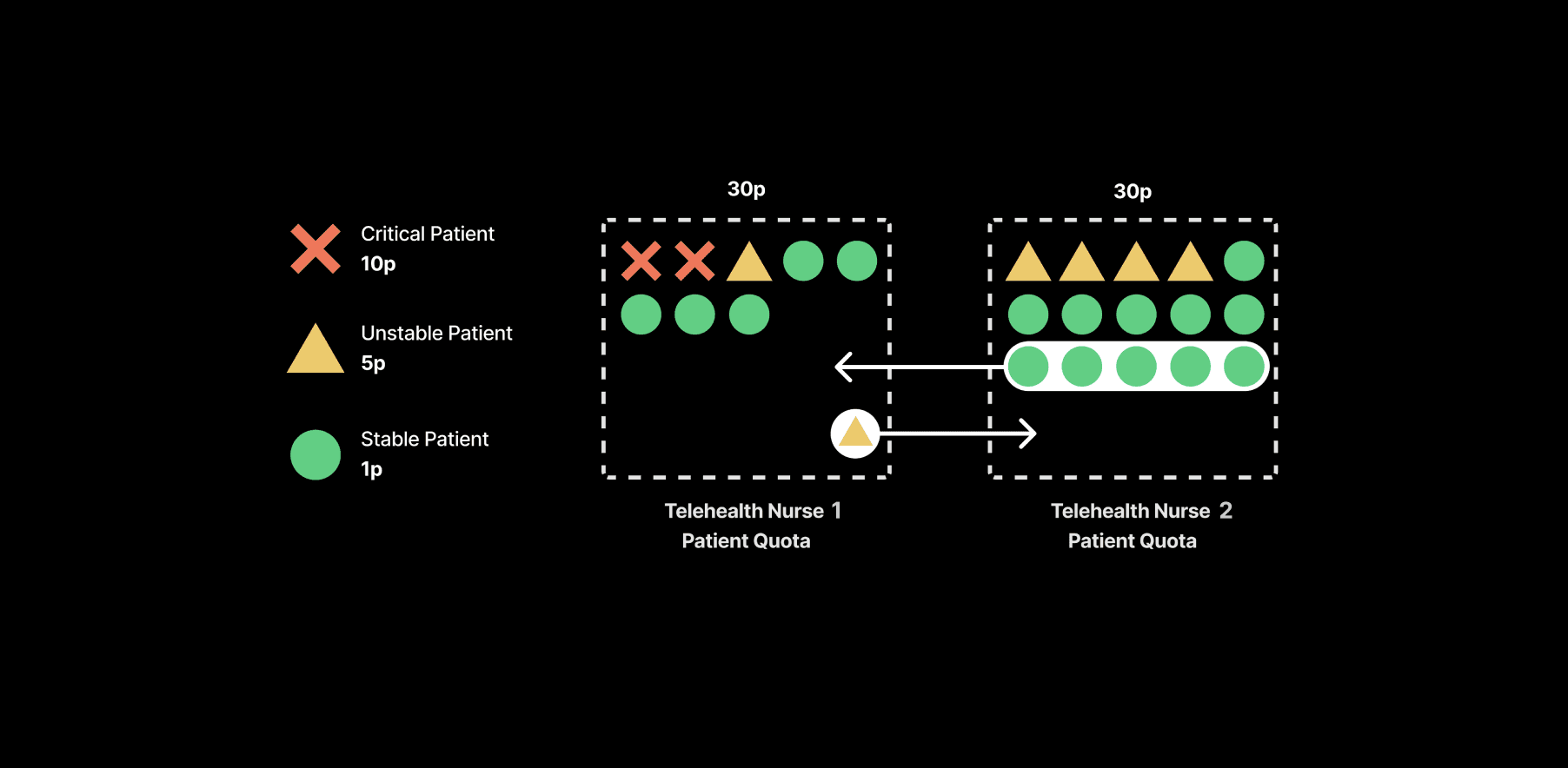
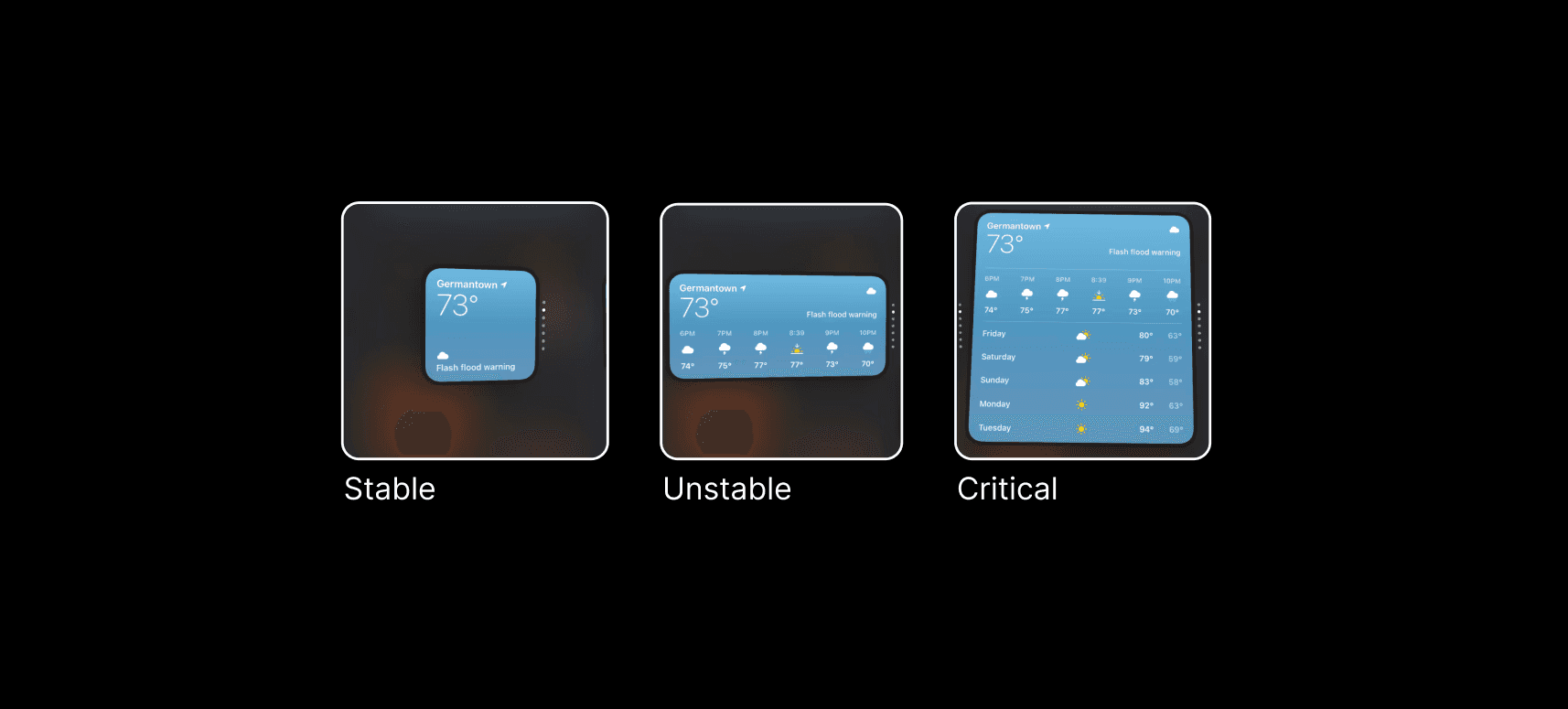
A speculative telehealth specialist's monitor, designed to support bedside nurses. To the right, the user can quickly switch between a single patient, focused care group, and all patients. The main screen prioritizes patients by scale in order of criticality.
UI focus: attention prioritization
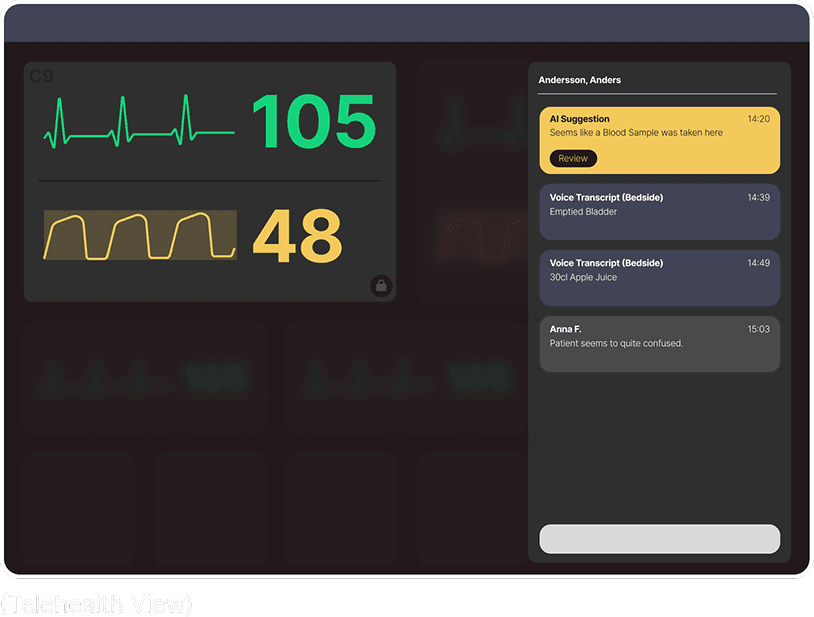
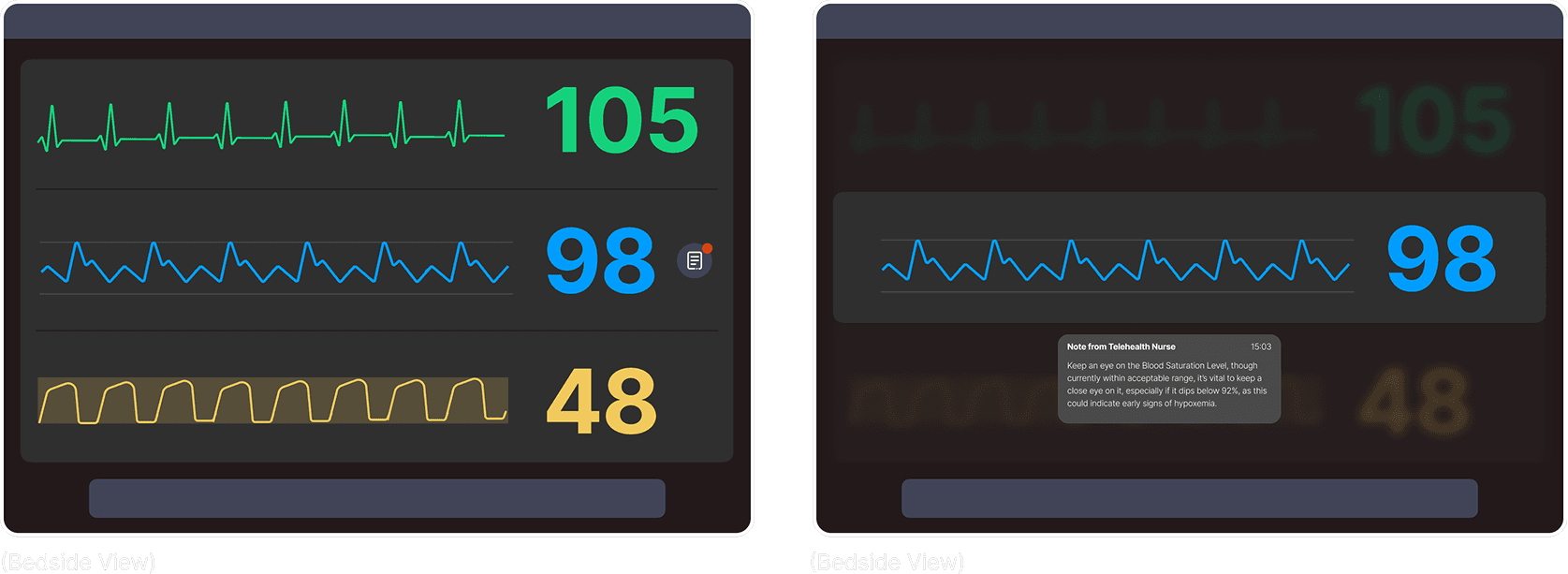
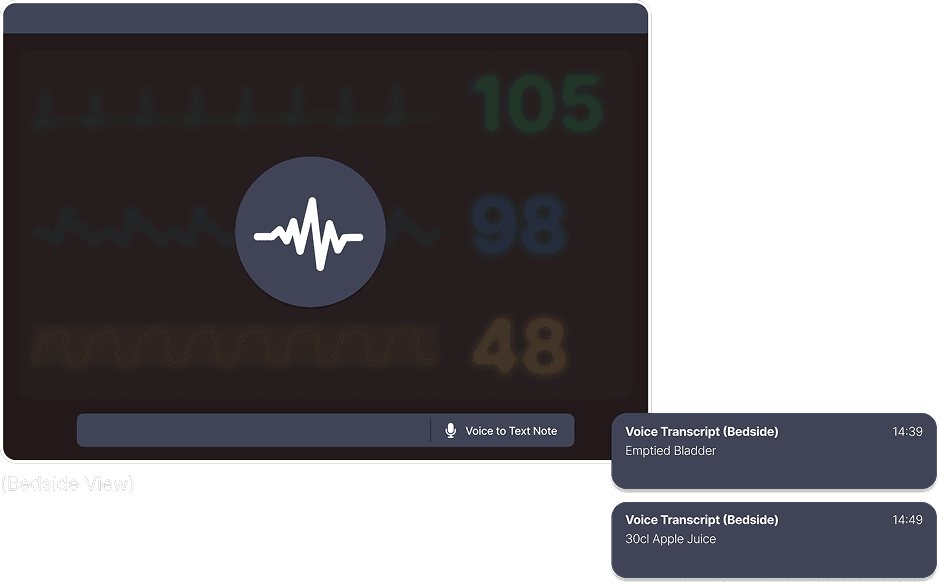
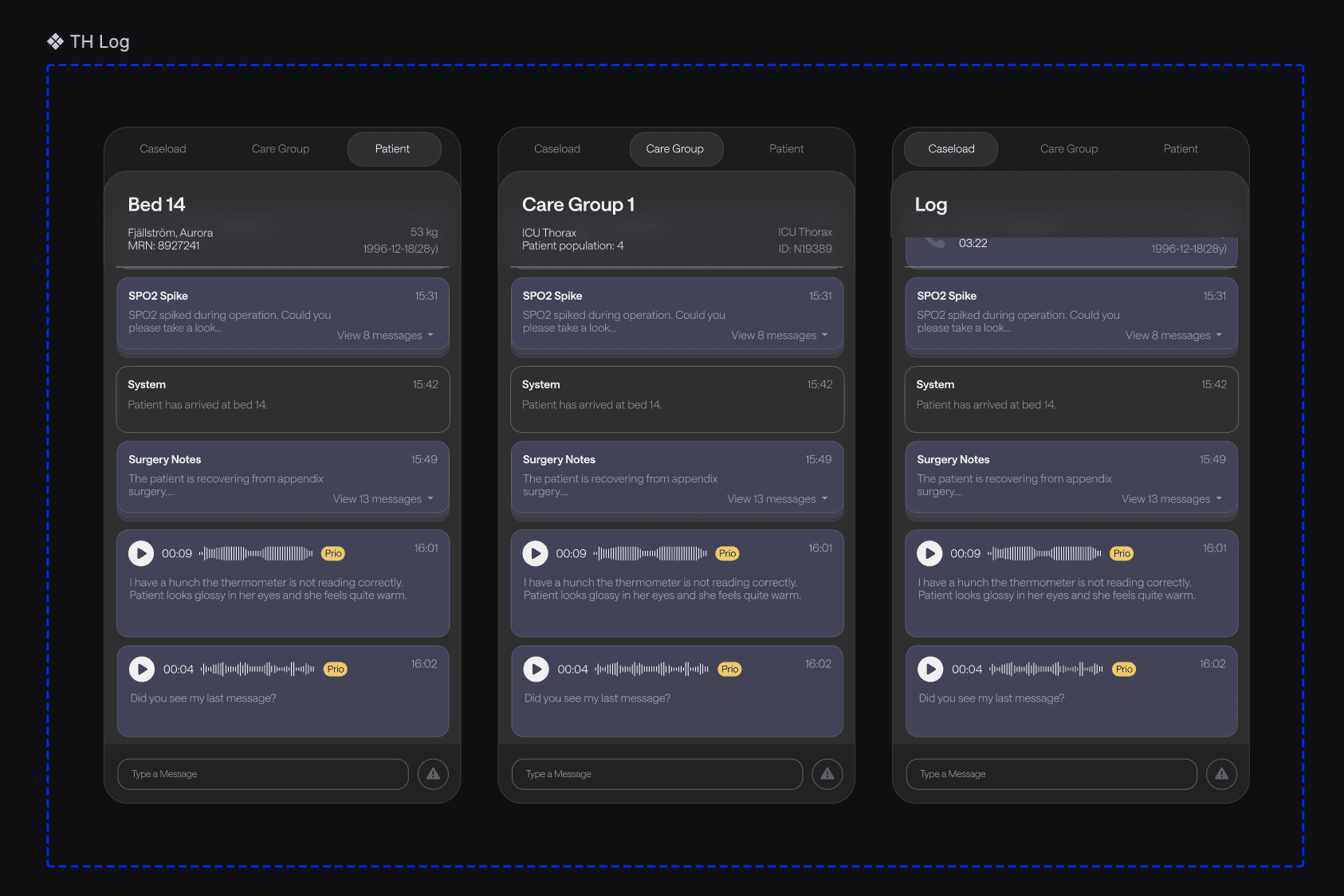
A speculative bedside nurse's monitor, with adaptable ways to communicate quickly and intuitively with a telehealth specialist. The user can open the right panel to pull up a communication log with several modes of communication: voice notes, prewritten quick messages, calling, and an open text field. The soft blue animation assures that a telehealth specialist is present.
UI focus: efficient, adaptable communication
Orientation
The Challenge
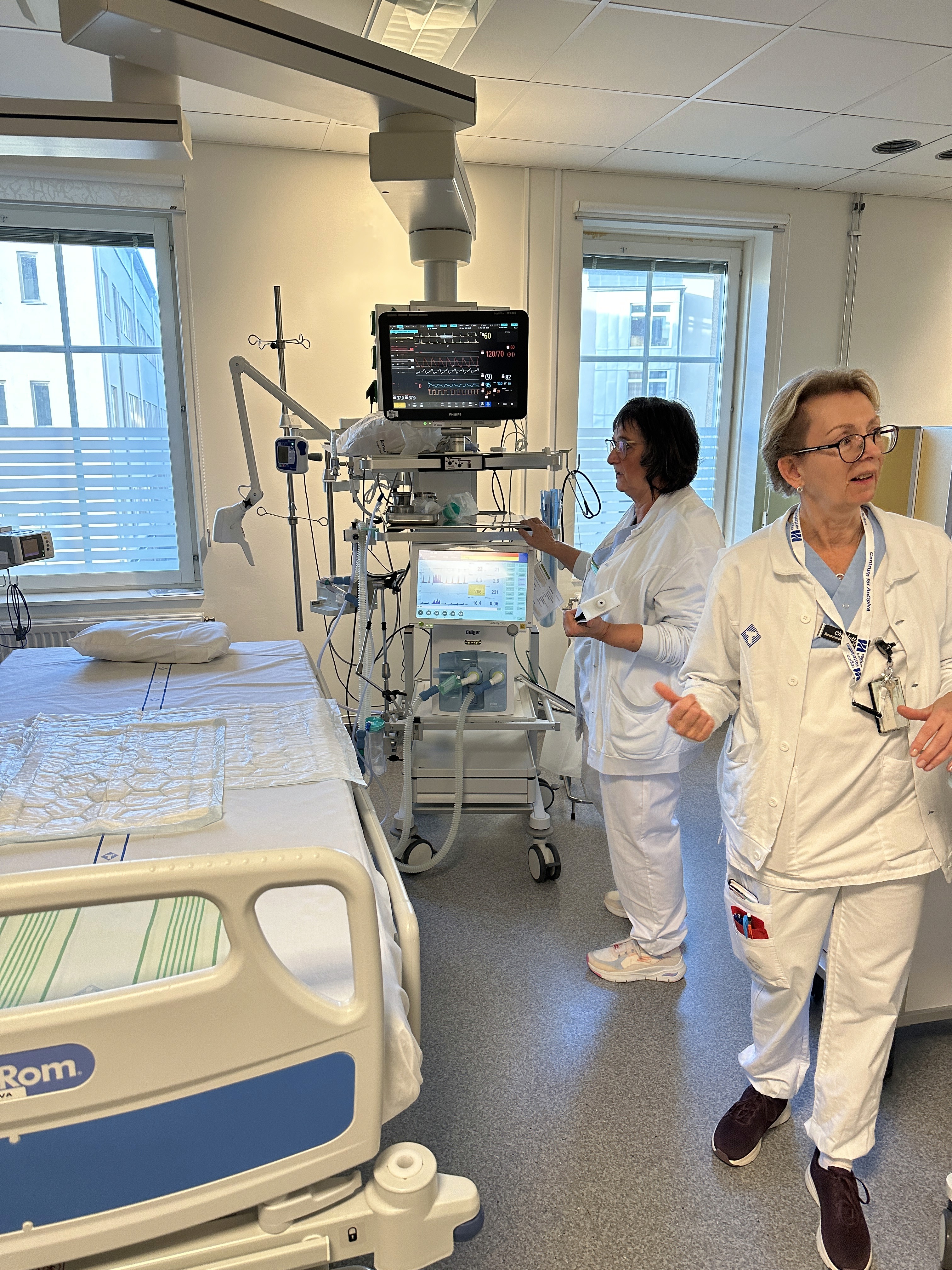
Shadowing ICU nurses
Situation
This group project was a collaboration between Philips Healthcare and our master's program in Interaction Design. Philips approached us with the following real world problem, and the emerging telehealth technology they have been researching as a potential solution. Telehealth, broadly, is a method of connecting patients with healthcare expertise remotely..
Problem
Hospital populations across Europe are increasing due to aging citizens and breakthroughs in medicine. Frontline healthcare workers, particularly nurses, are feeling the strain. This vicious cycle leads to burn-out, and even greater short-staffing. How might we ease this strain, supporting nurses with the emerging technology of telehealth-care?
Action
Our group, through desk research, a local hospital visit, and nurse interviews, narrowed the scope of "telehealth" to one concept: one remote healthcare specialist that can support up to 24 bedside nurses. Our challenge would be to design a reliable, intuitive, and seamless set of communication tools between them.
Result
Two interfaces: one for the bedside nurse, one for the telehealth specialist. Our design focused on allowing intuitive communication and ease of visibility without cognitive overload.
Design Process
Process
01 User research in context
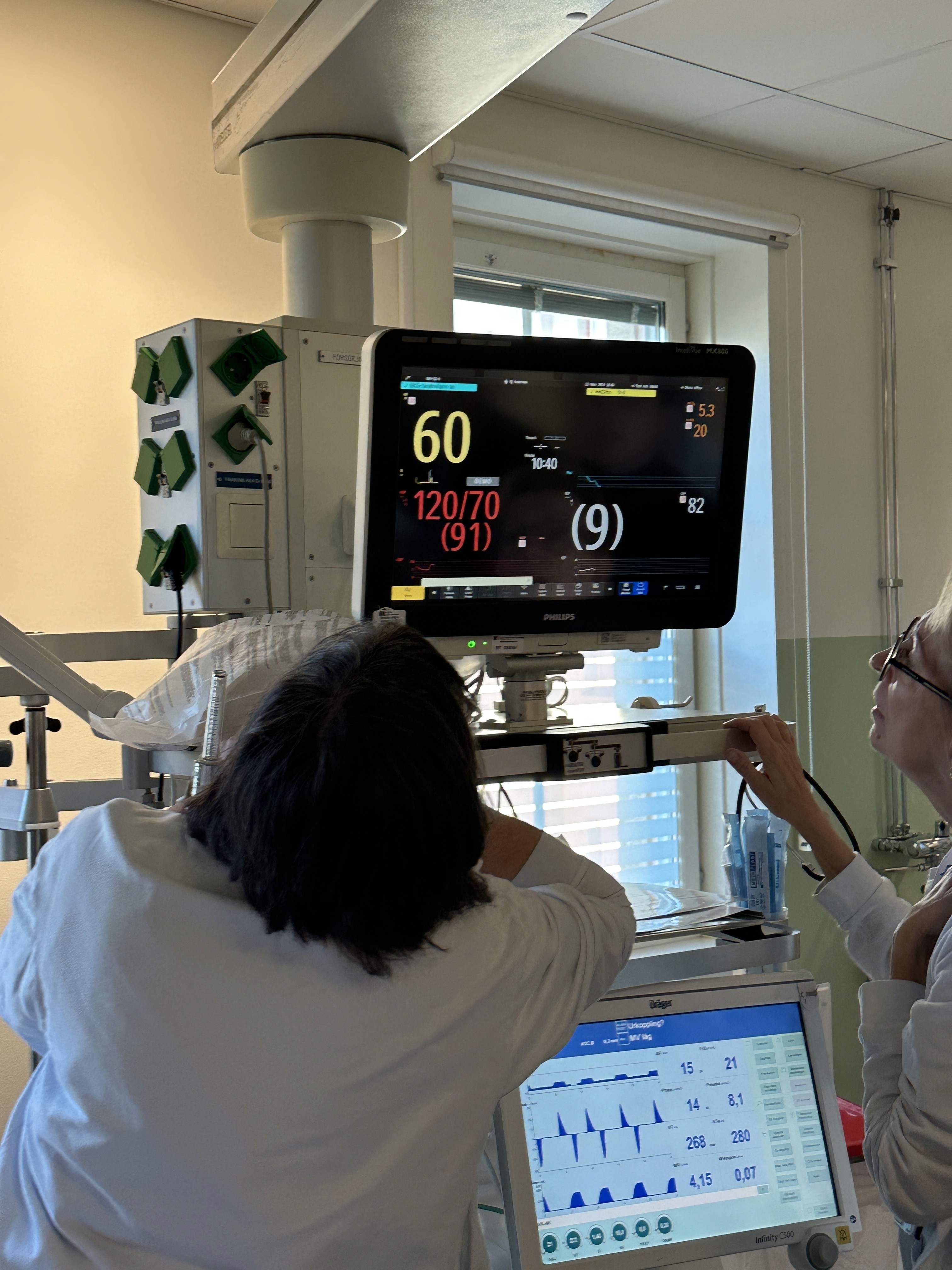
Shadowing healthcare professionals in context, noting down their stories, and setting up contact through key moments in the project.
02 Processing qualitative data
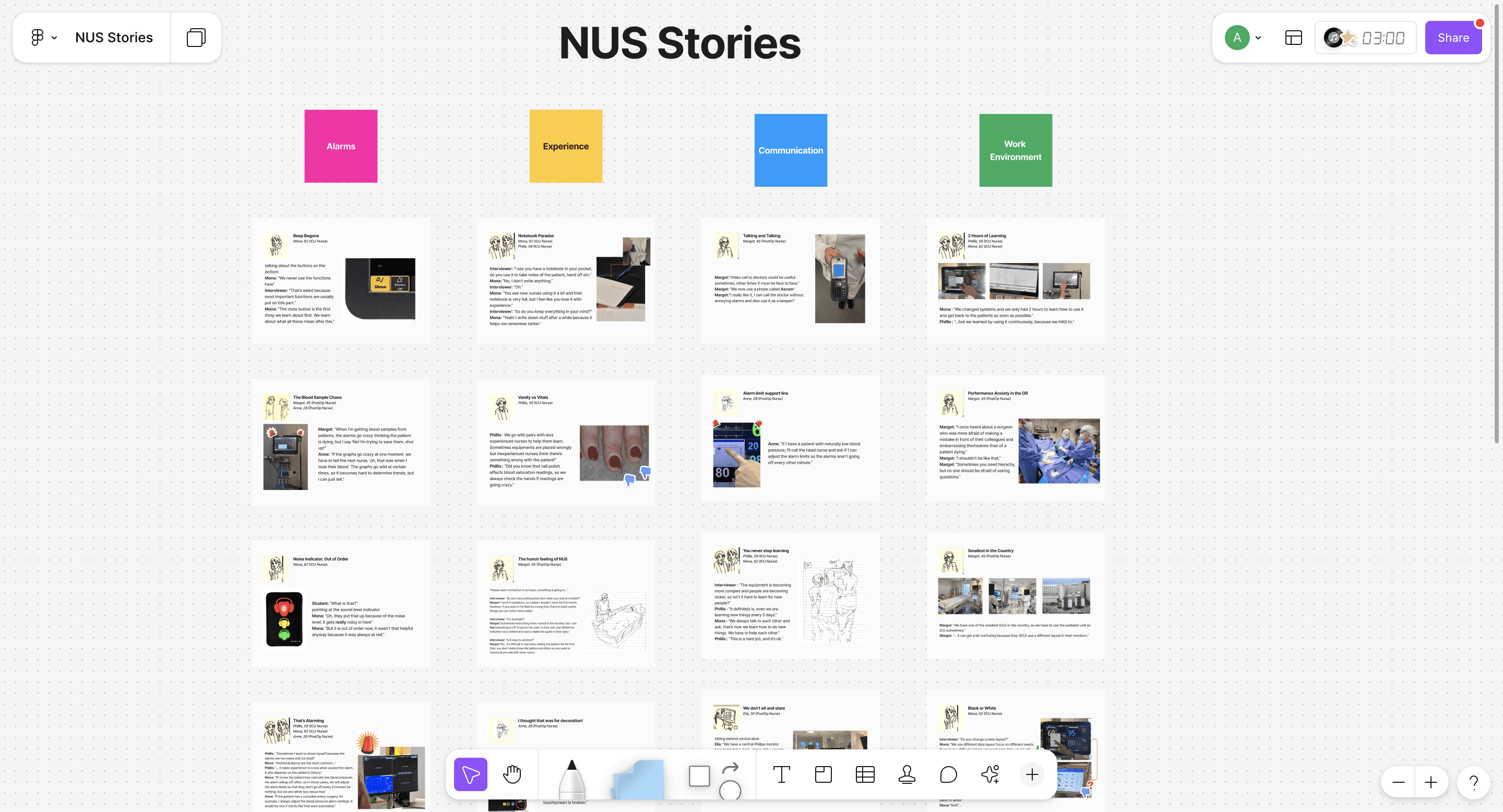
We then distilled these qualitative stories into story cards, organized into themes: Alarms, years of experience, communication, and work environment.
We worked to understand the heart of these themes, and how they could relate to our project.
Alarms = better prioritization of criticality
Experience = strong support system for newbies
Communication = adaptable lines of communication
Work environment = equal partnership
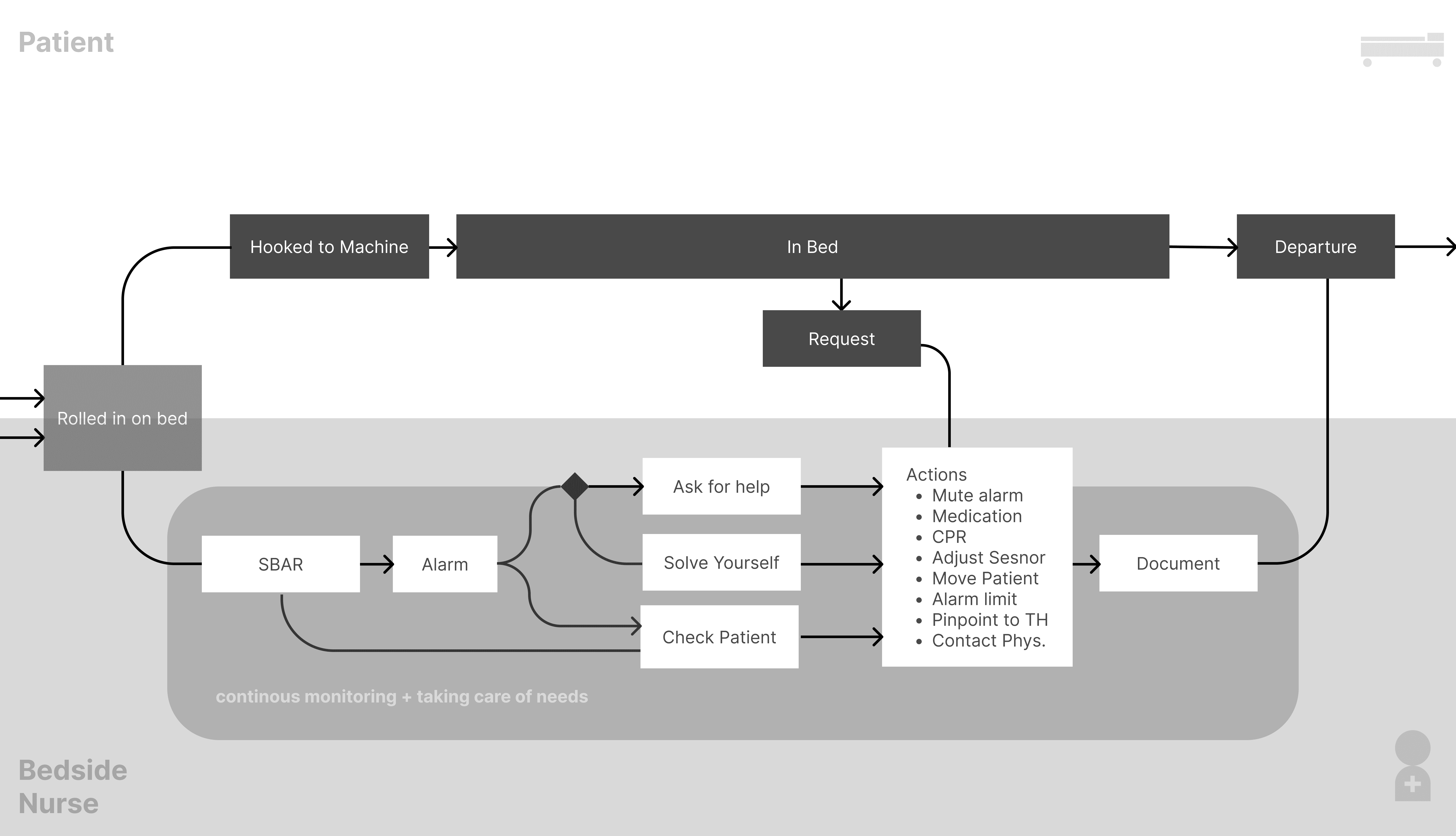
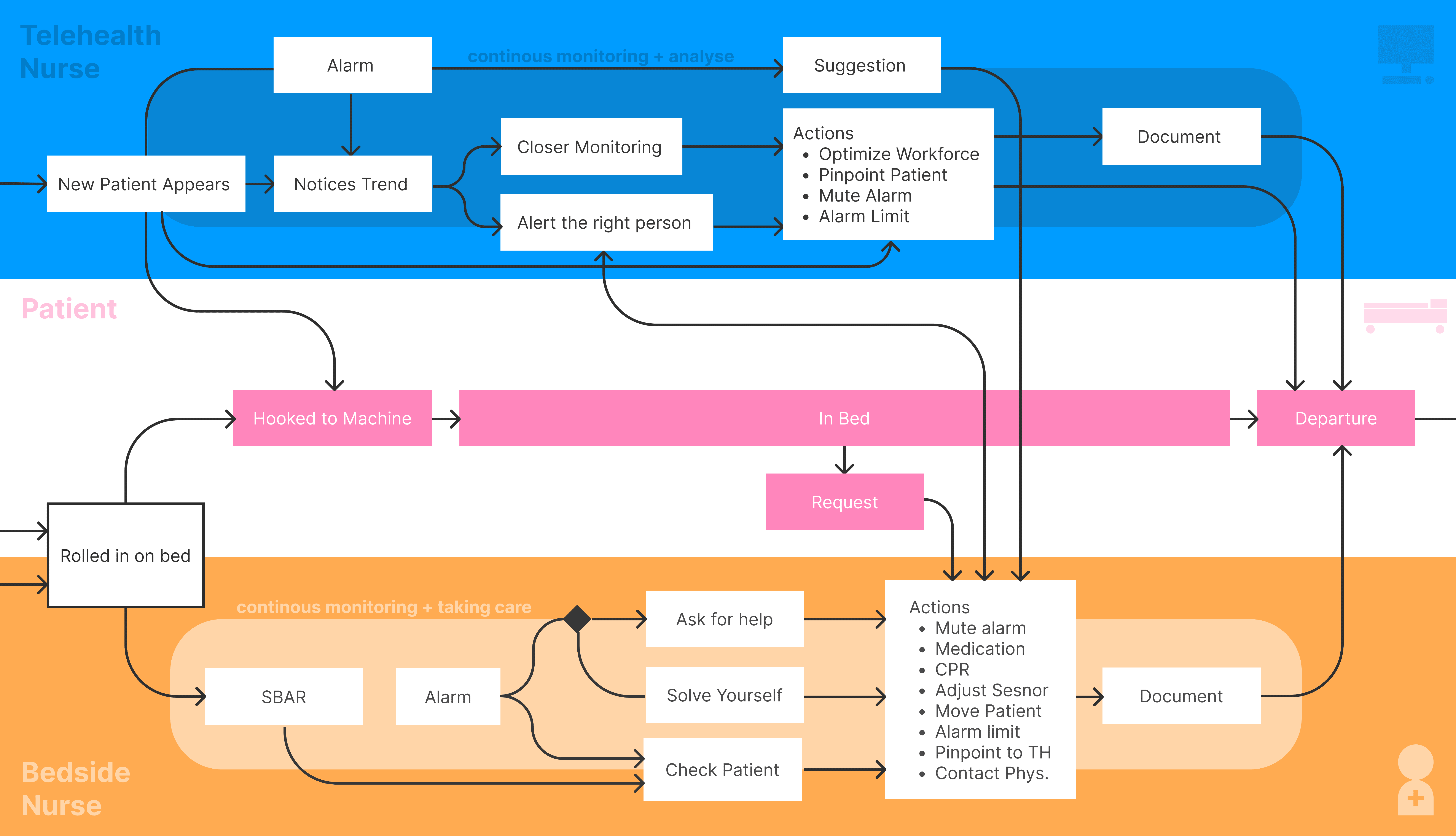
03 Journey mapping
Zooming out from these specific concerns, we wove the stories we'd heard together into one cohesive journey. Then, we designed a parallel, speculative journey with the addition of our telehealth system.
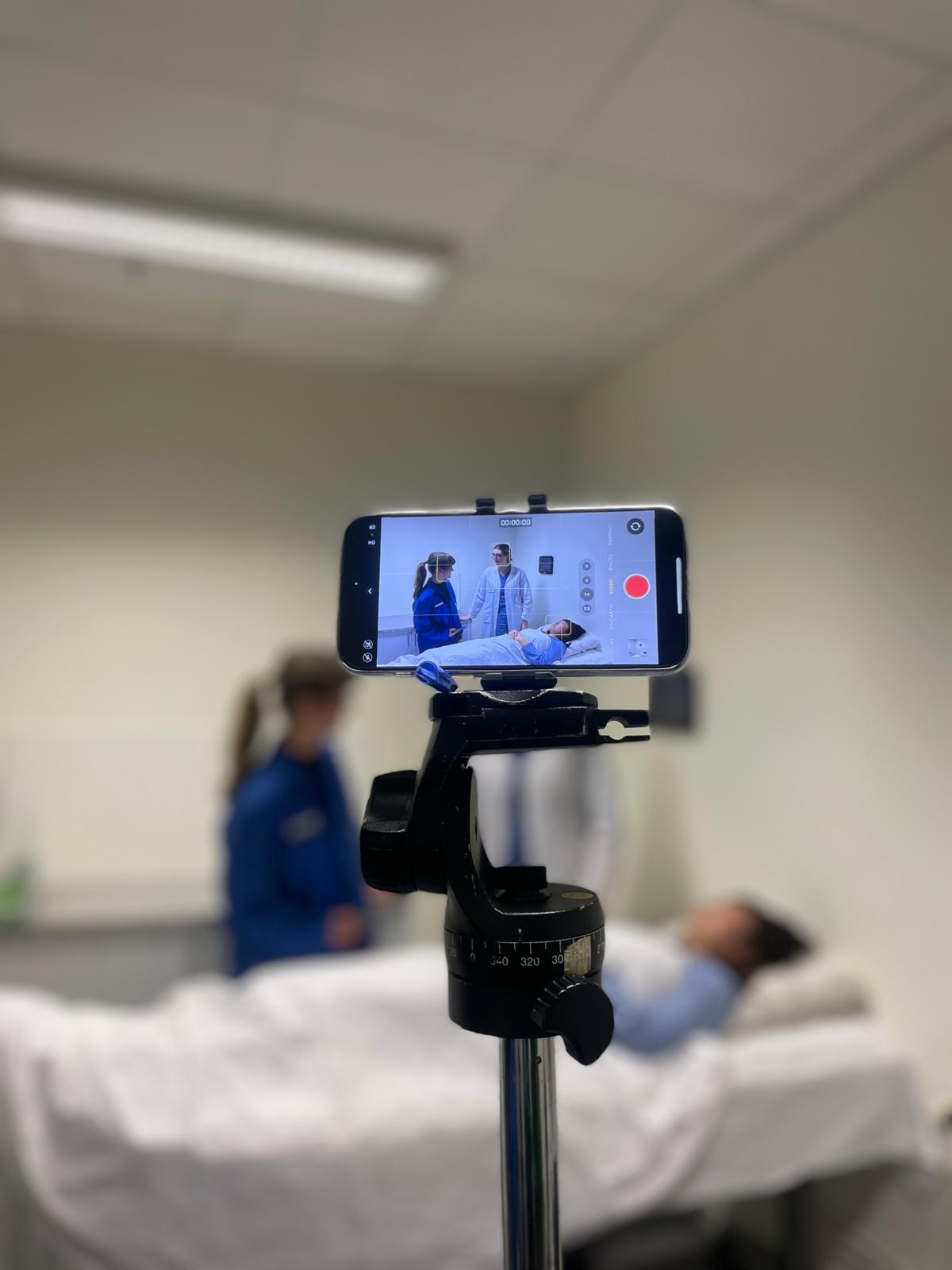
04 Bodystorming
Physically moving through scenarios to pinpoint unforeseen issues.
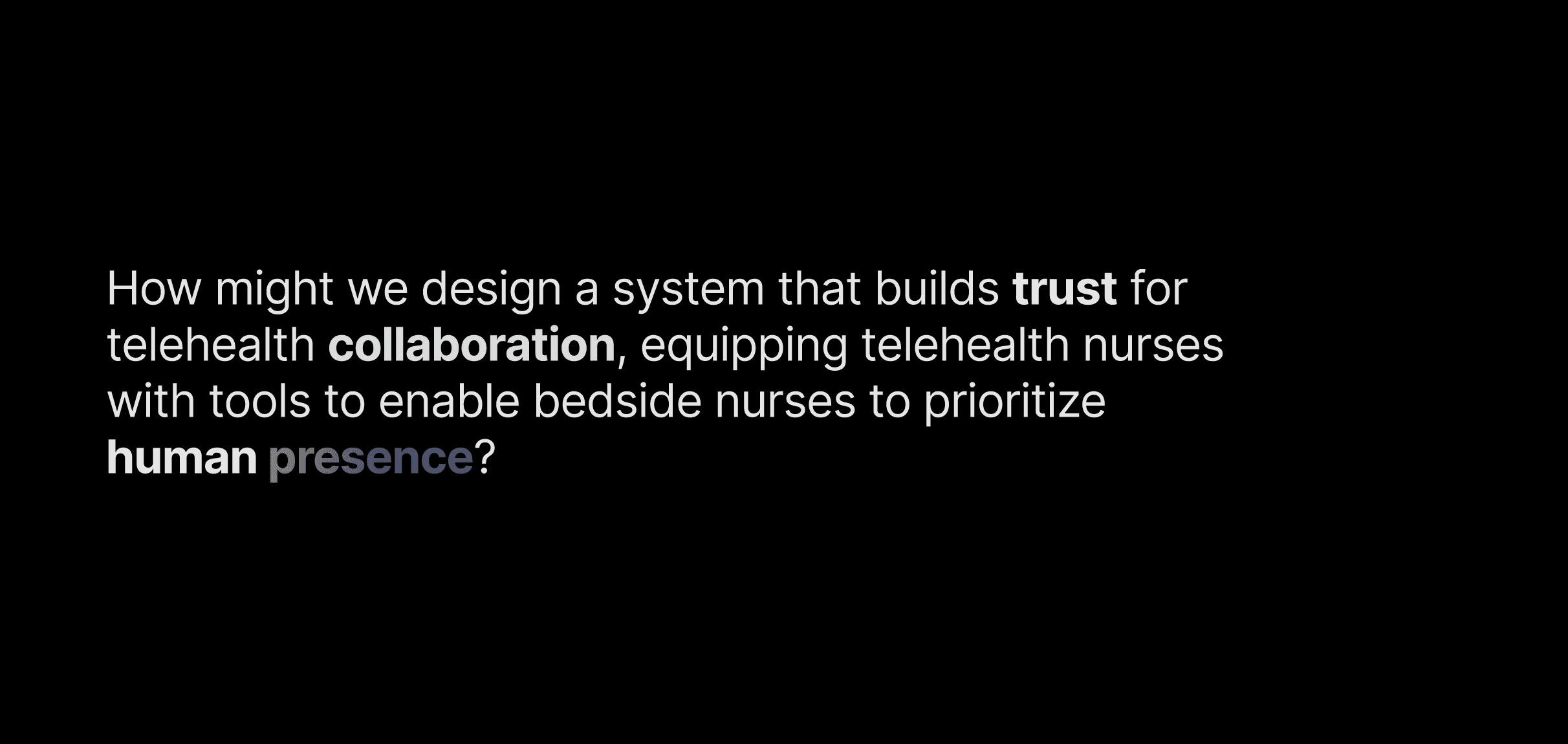
05 Defining our principles
Trust, collaboration, and human presence became the defining keywords guiding our design principles.
Through our research, we discovered that trust in new medtech or processes was a top priority in determining whether it would be adopted. We also believed in framing the TH-BS relationship as an equal collaboration rather than a hierarchy. The last principle was to hold the end goal as increasing human presence at the bedside, rather than replacing bedside nurses with remote specialists.
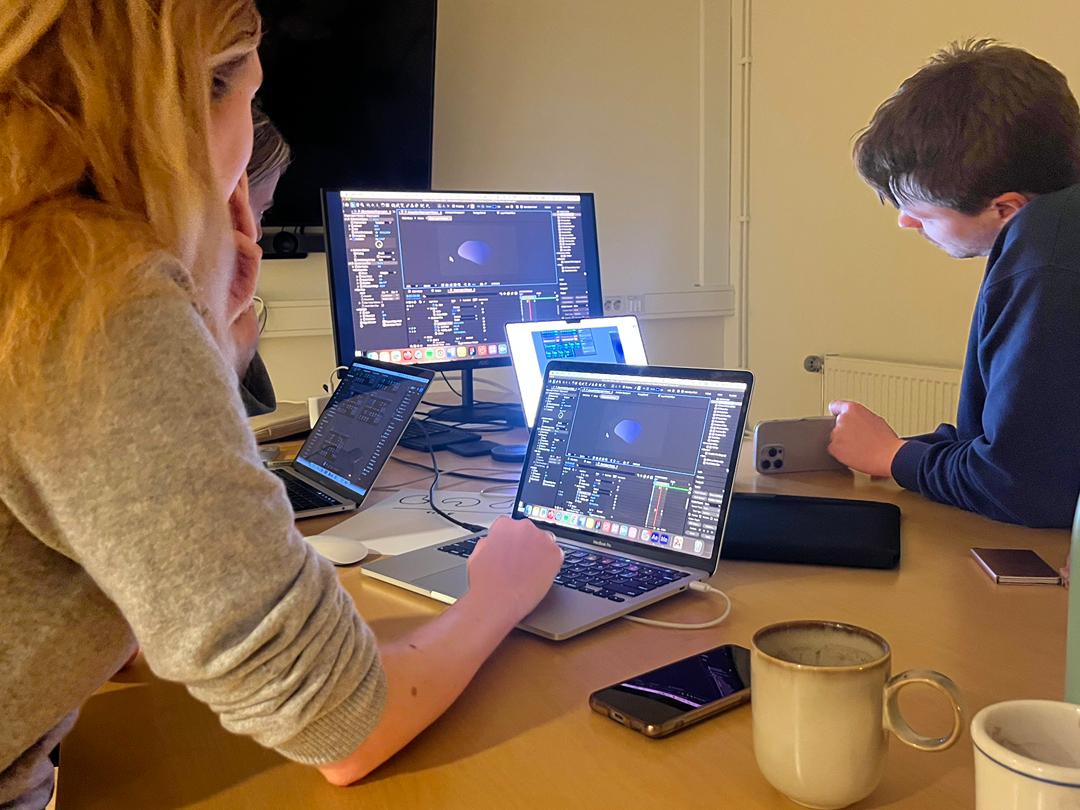
06 Prototyping
First iterations based on our research and principles.
07 UI Focus: Prioritization
Prioritization of urgent situations is of the utmost importance when designing for healthcare. What is the best way to tackle this issue from a UI perspective?
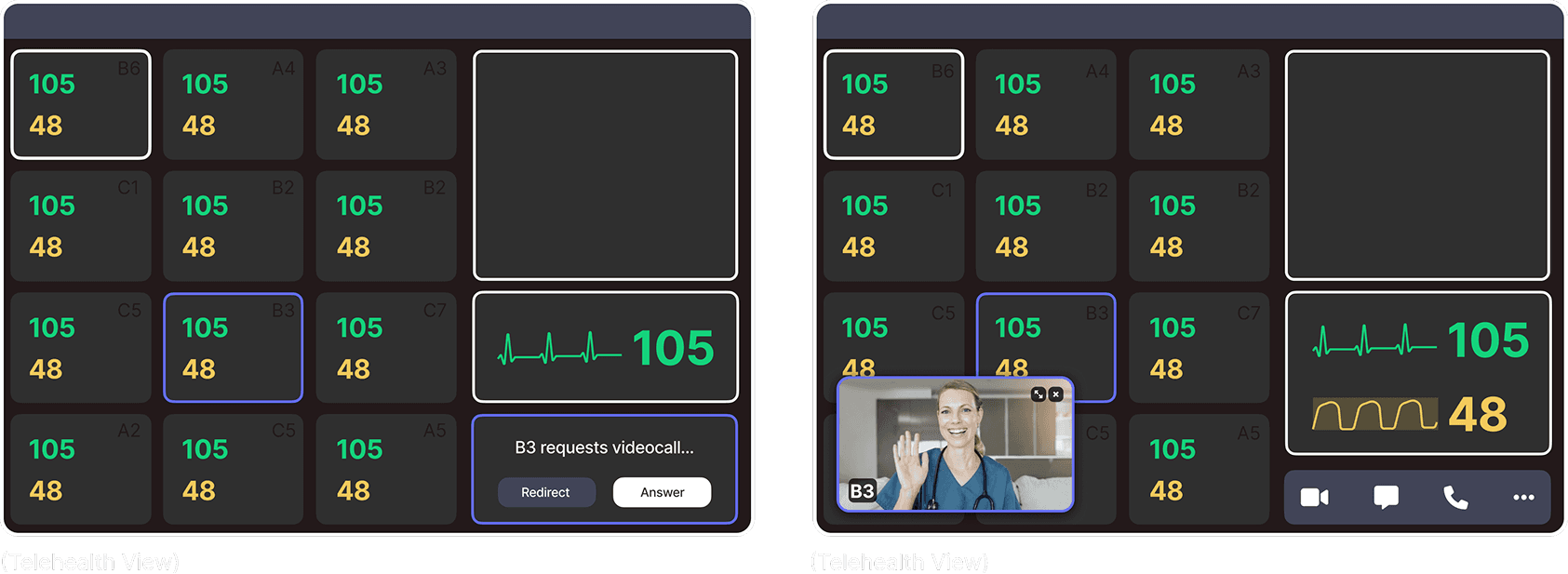
08 UI Focus: Communication
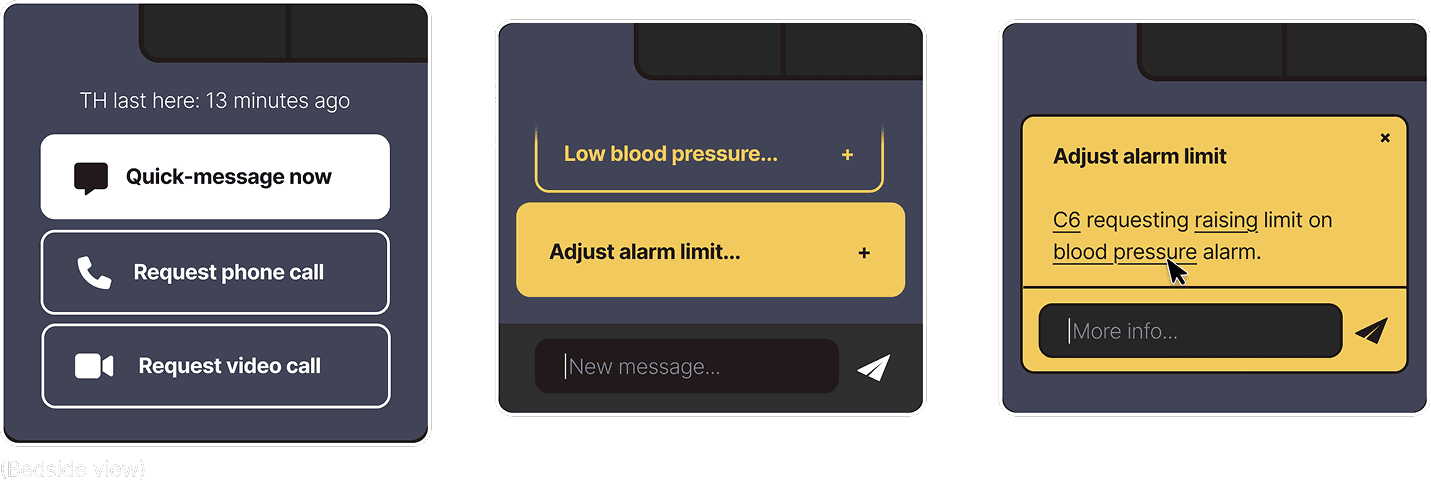
The bedside nurse and telehealth specialist have different needs for communication. The bedside nurse needs quick communication modes adaptable to different situations. Sometimes hands-free voice dictation is ideal, while other times, silent messaging is preferred.
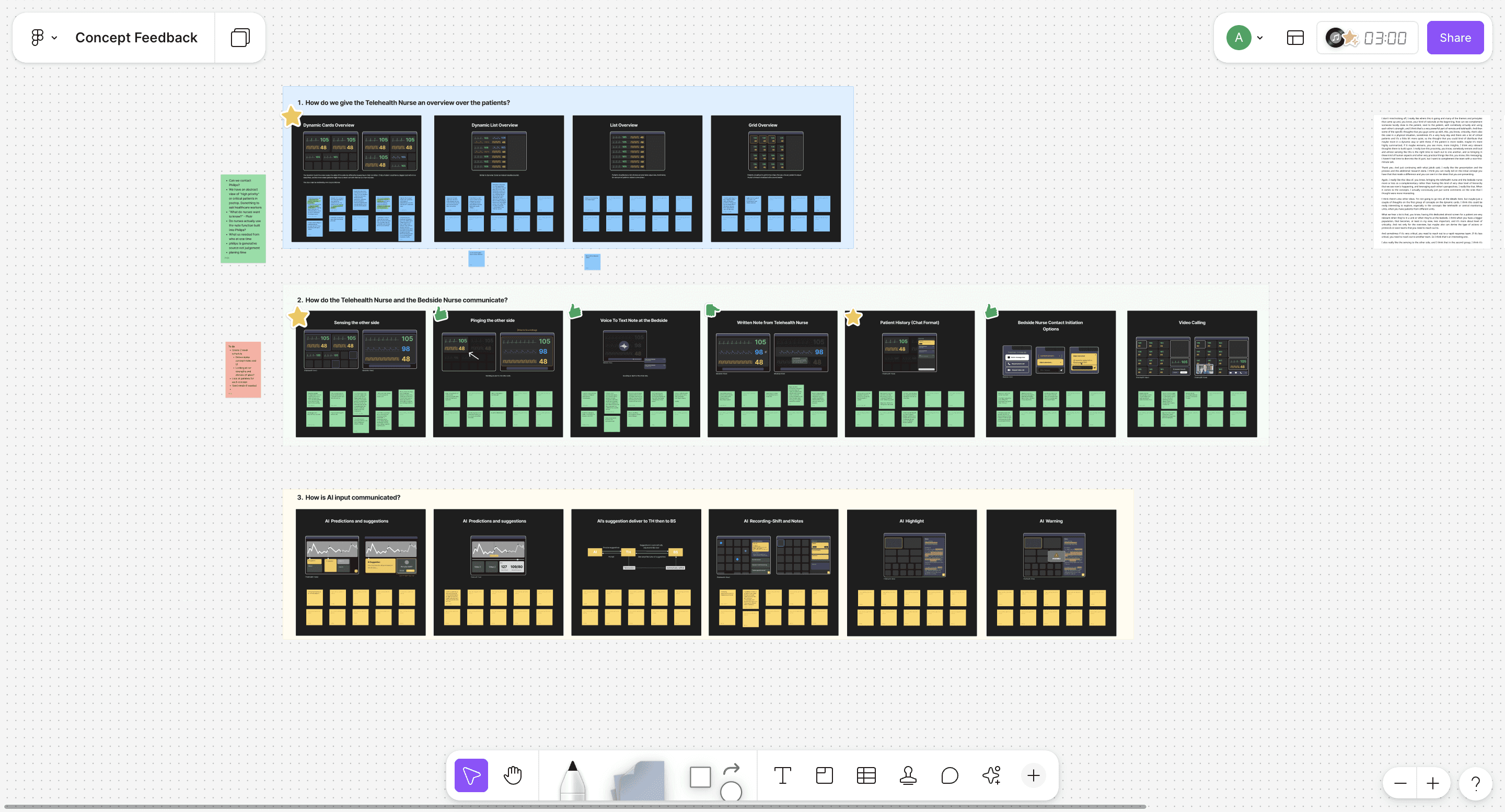
09 Feedback Session
Testing concepts with healthcare professionals and design experts to reground our work.
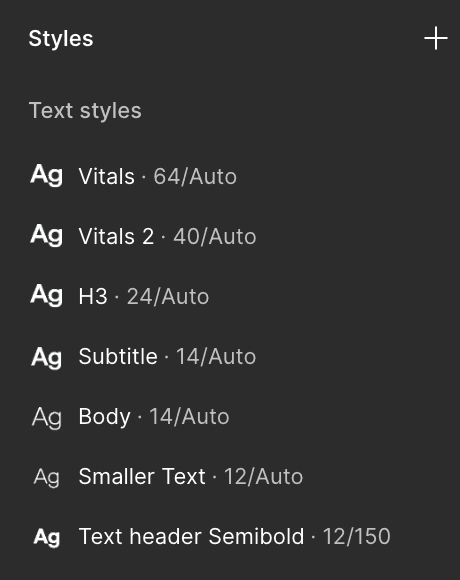
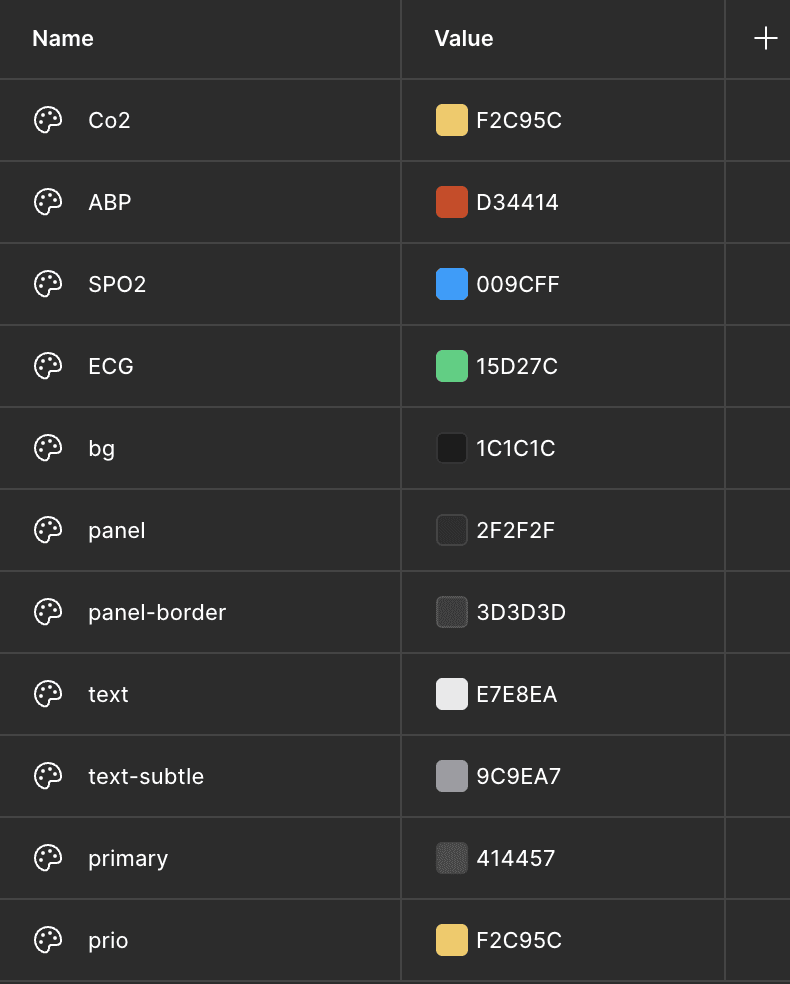
10 Design system
Creating our design system with the principles we'd learned from the ICU at the forefront. Our priorities were: confident prioritization, strong support system, adaptable lines of communication, equal partnership.

11 Iteration
Prototype, feedback, refine, and repeat.
Documentation