At a Glance
Emerging immersive technology is evolving rapidly. Policy-making systems are not designed to accommodate the speed of this evolution. This widely accessible personal tech massively impacts the average citizen, and on a larger scale, shapes societies. How might we rethink the way we democratically shape the evolution of this technology?
Situation
The Rathenau Instituut is an EU-founded political science thinktank in the Netherland to conduct research into the way technology impacts society. They approached Digital Society School with this problem. DSS was founded to bring design talent to the Netherlands to address complex problems, parntnered with Dutch organizations. Myself, together with a team of 3 other researchers, spent 5 months working with this problem.
Action
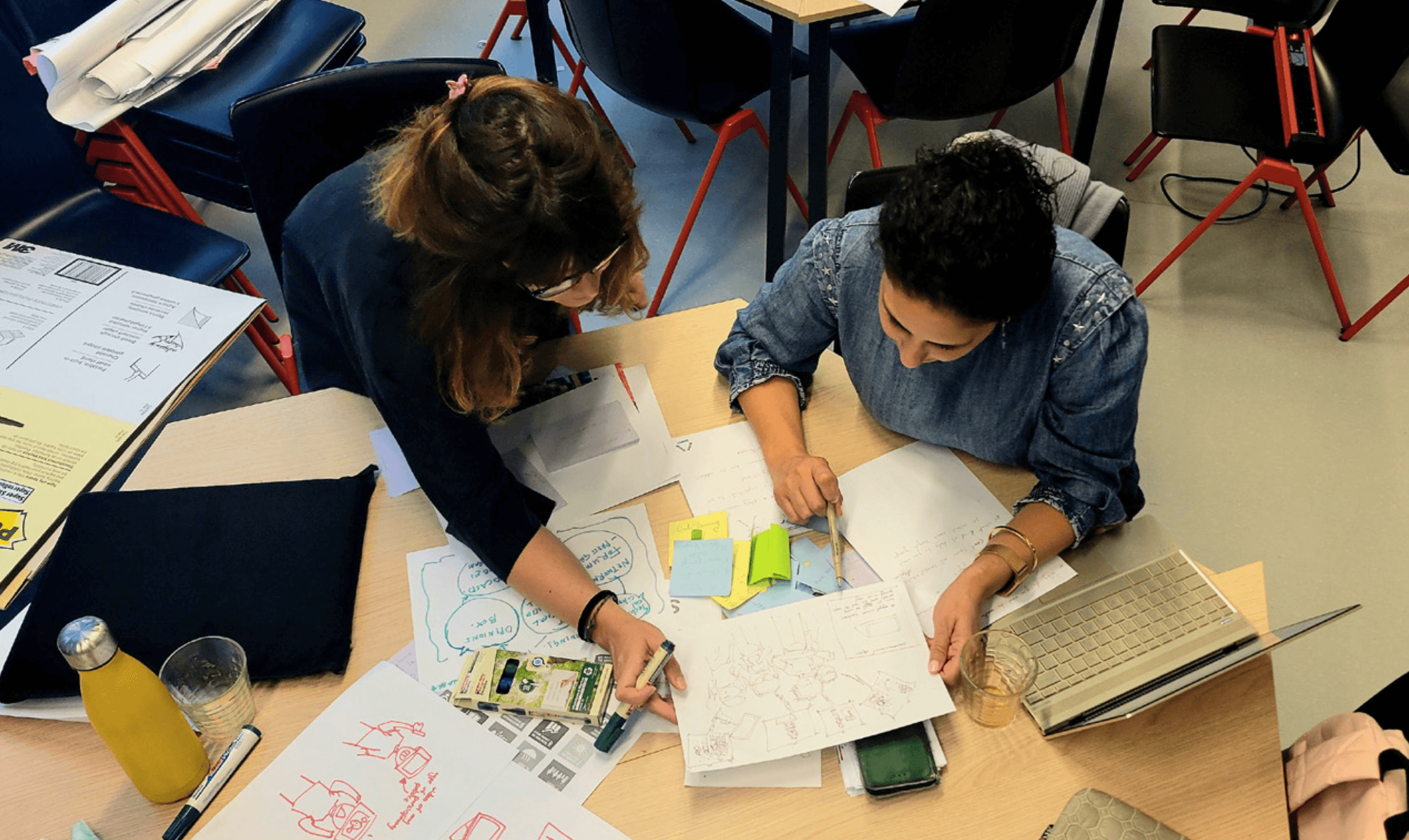
We began by understanding the problem proposed by our partner by conducting a workshop together to define the problem statement and scope of the project. We then visited Cybersoek, a non-profit set up to support adults to become technologically fluent, and conducted interviews with the experts there, both teachers and learners. From this understanding, we prototyped, tested, and iterated until our final result.
Problem
Emerging immersive technology is evolving rapidly. Policy-making systems of yesterday are not designed to accommodate the rate of this evolution. This widely accessible personal tech massively impacts the average citizen, and on a larger scale, shapes societies. How might we rethink the way the public engages democratically with the development of such tech?
Result
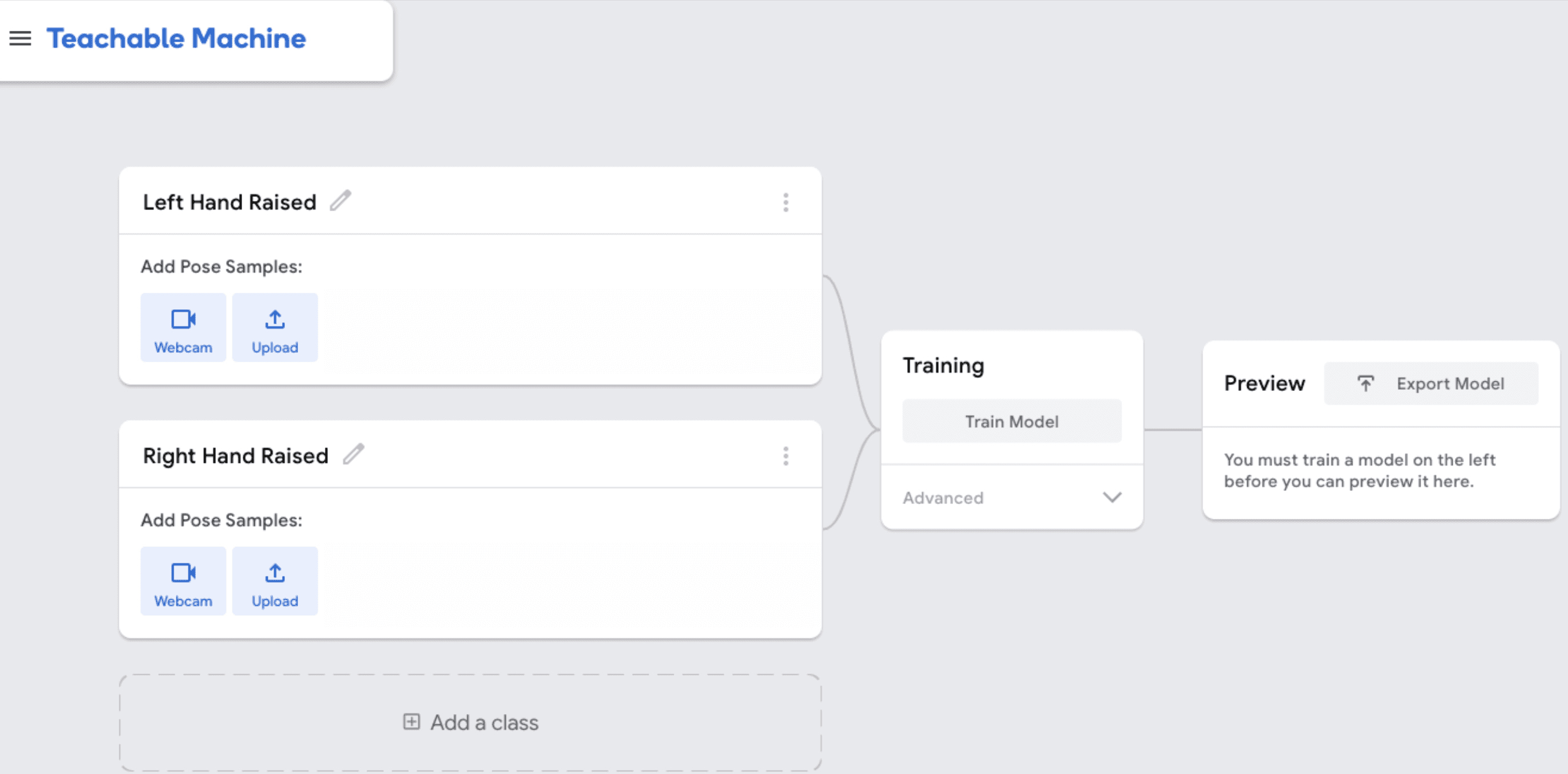
From our user research, we defined our constraints: our prototype would be accessible, engaging, low-barrier-to-entry, interactive, and story-based. The final product was an interactive choose-your-own-adventure story implemented with Teachable Machine. This meant that all a user would need was a webcam and our URL to go through the story.
01 Aligning with stakeholders
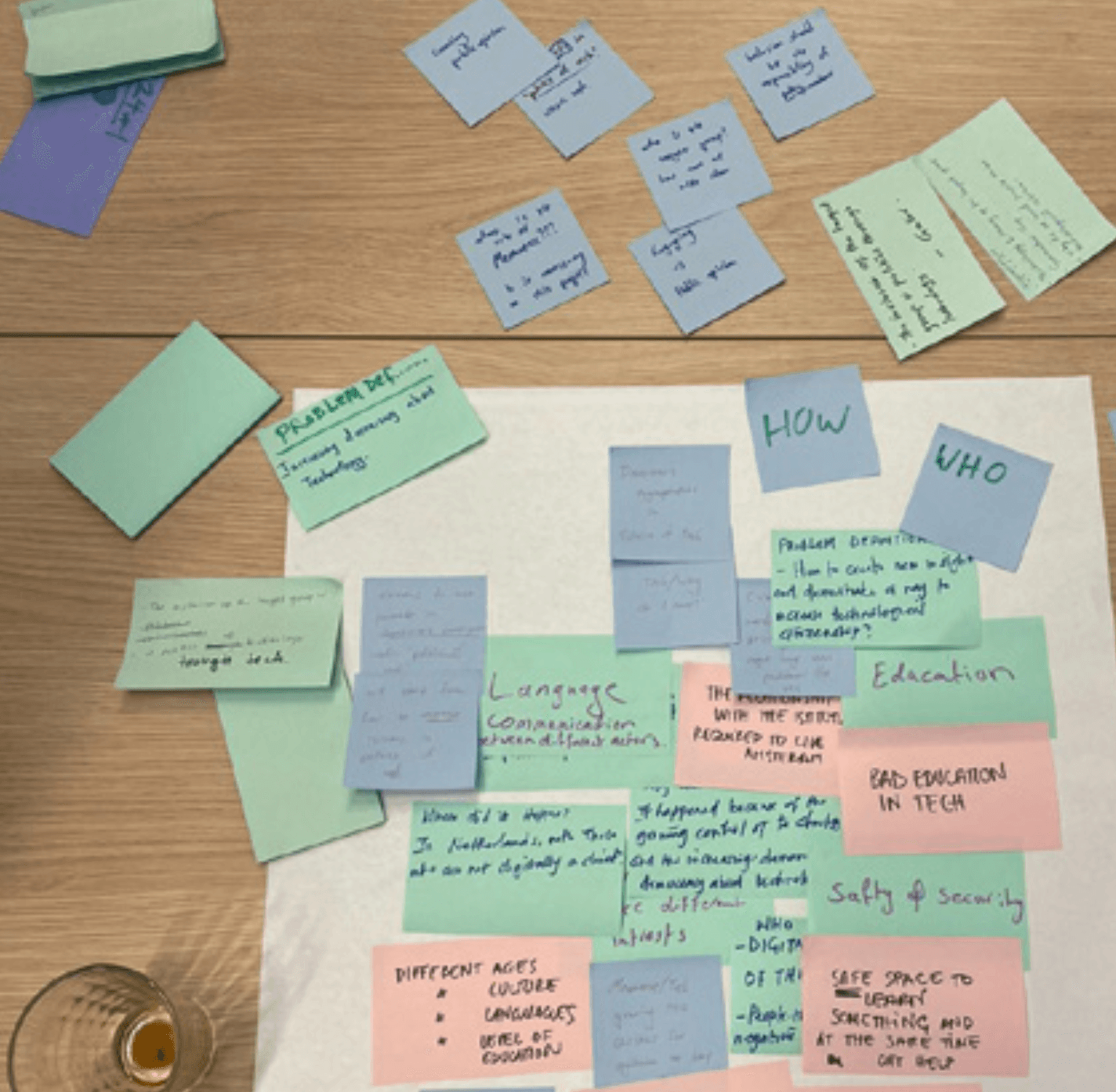
Aligning with our major stakeholders via a discovery workshop, including: the Rathenau Instituut thinktank, the library in which the prototype would be stationed, and DSS as the bridge between our team and these stakeholders.
02 Expert interviews
Meeting with a local nonprofit, Cybersoek, which specializes in engaging community members in learning about technology.
03 Testing in the library
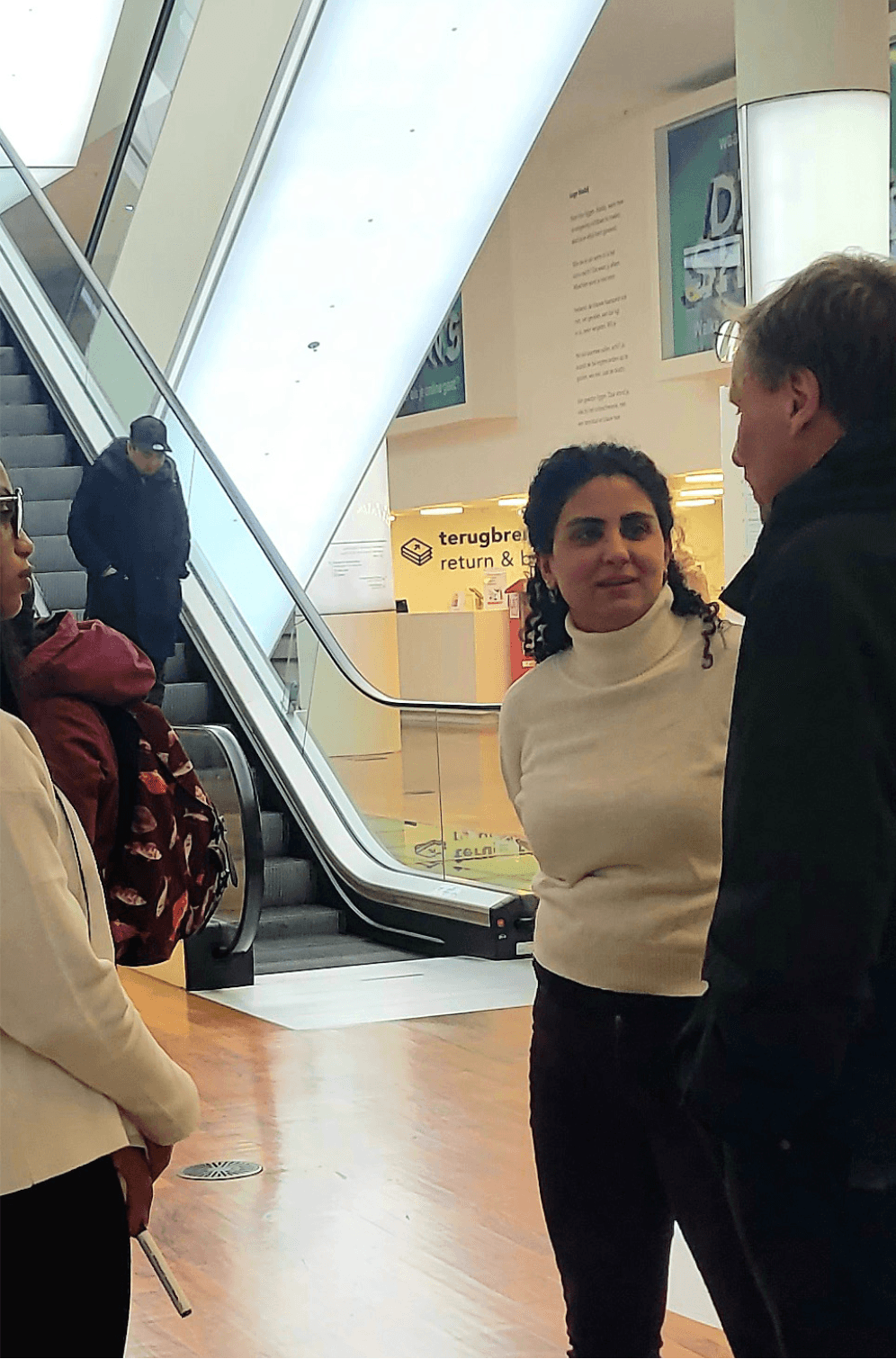
Testing our interactive Figma prototype in the public library, taking notes, and iterating.
04 Prototyping
From storyboard to Figma prototype to Google's Teachable Machine.
05 Implementation
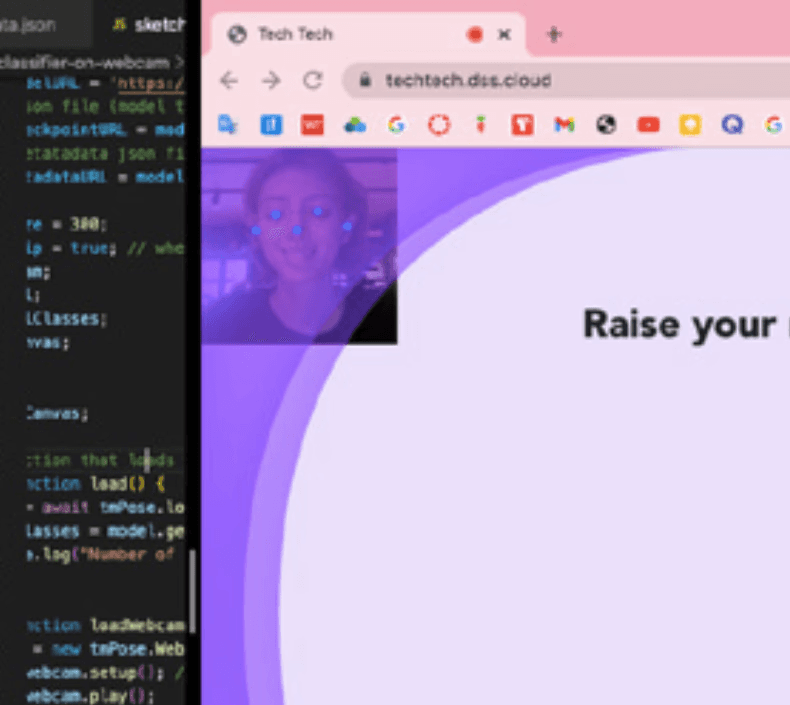
As the "tools and instruments master" on the team, I explored different possibilities for implementing our concept, settling on Teachable Machine. We worked closely with a developer for the final implementation.
06 Testing again
We tested our final prototype with great excitement from our partner and community members.
Output
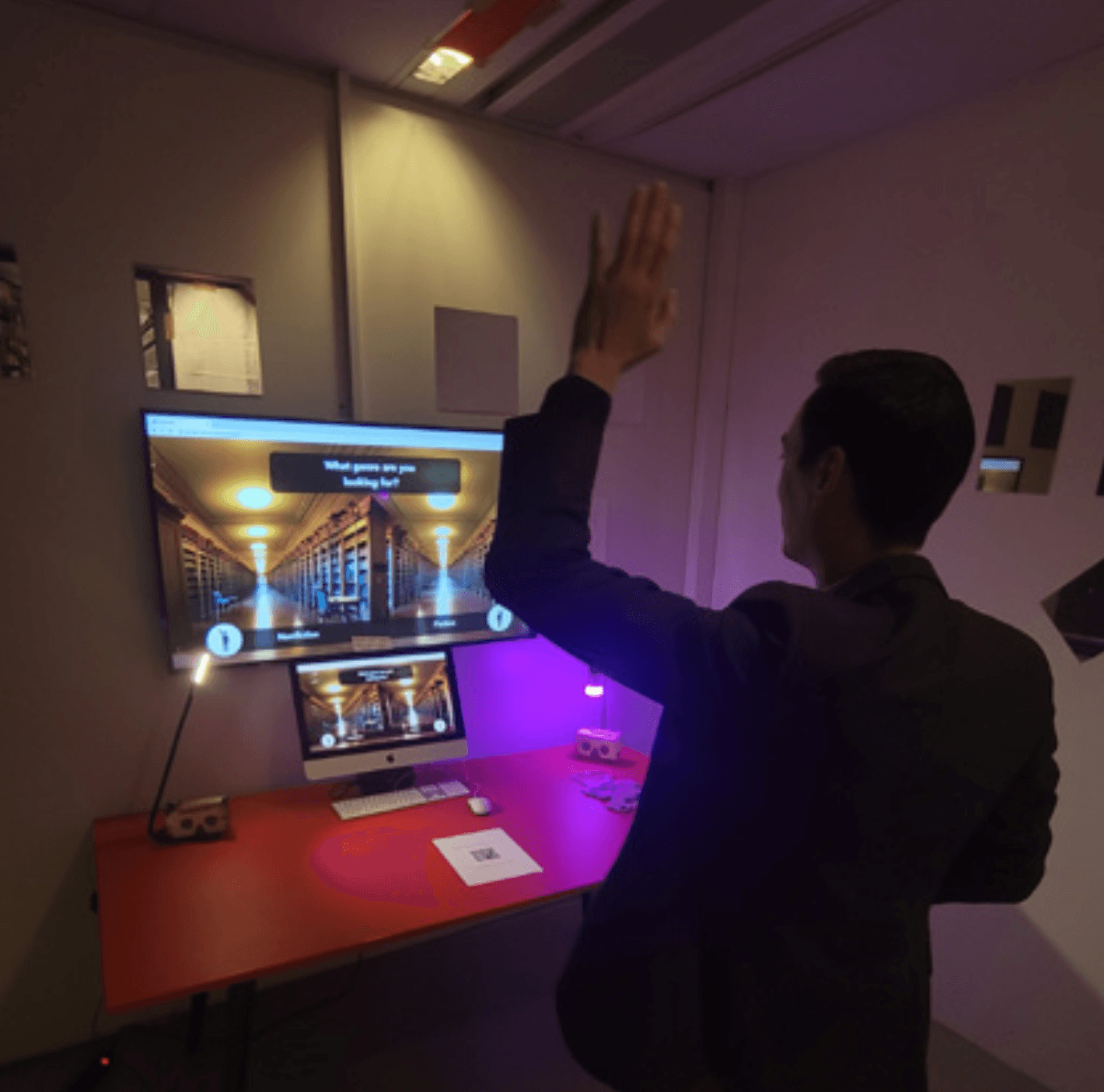
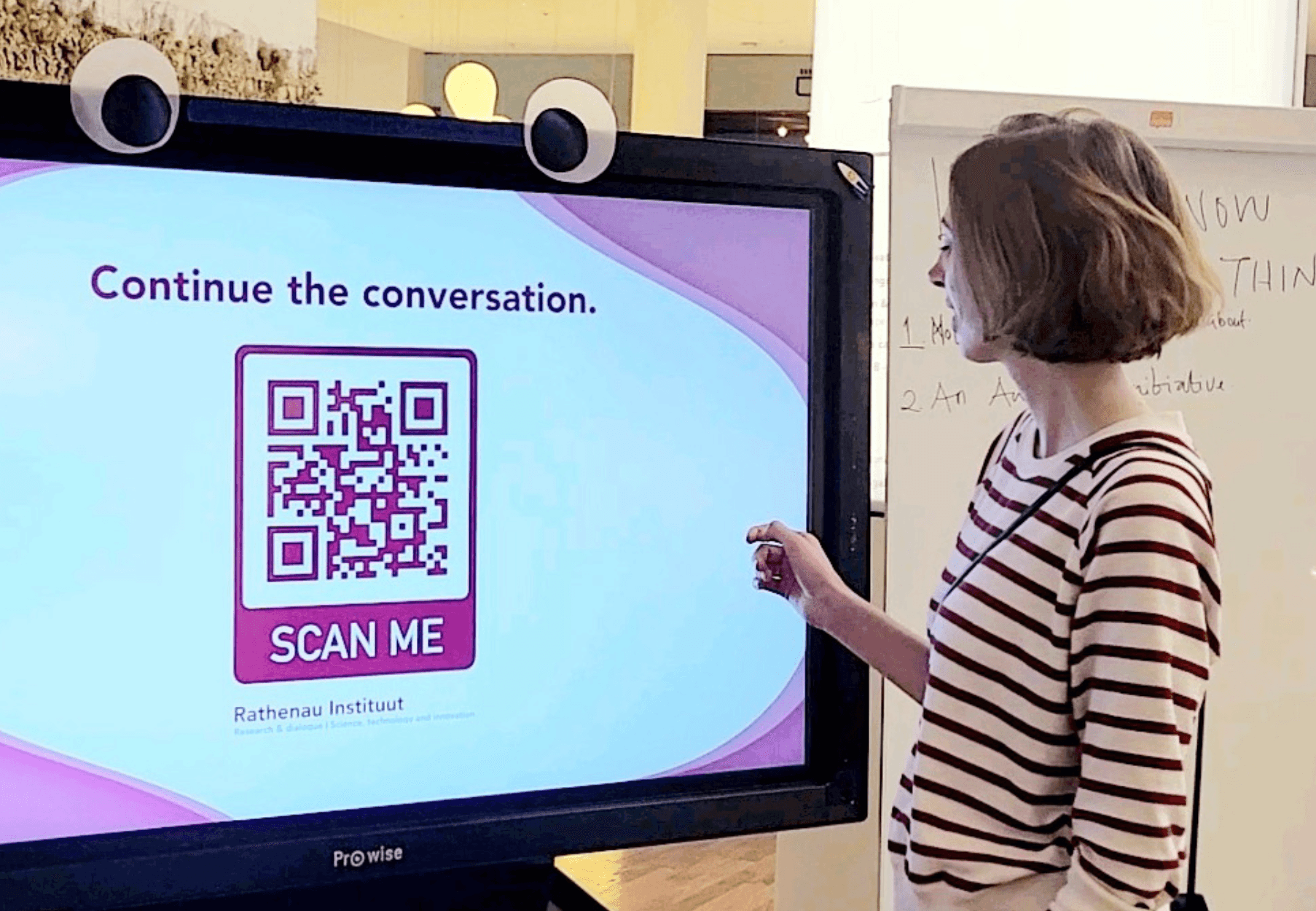
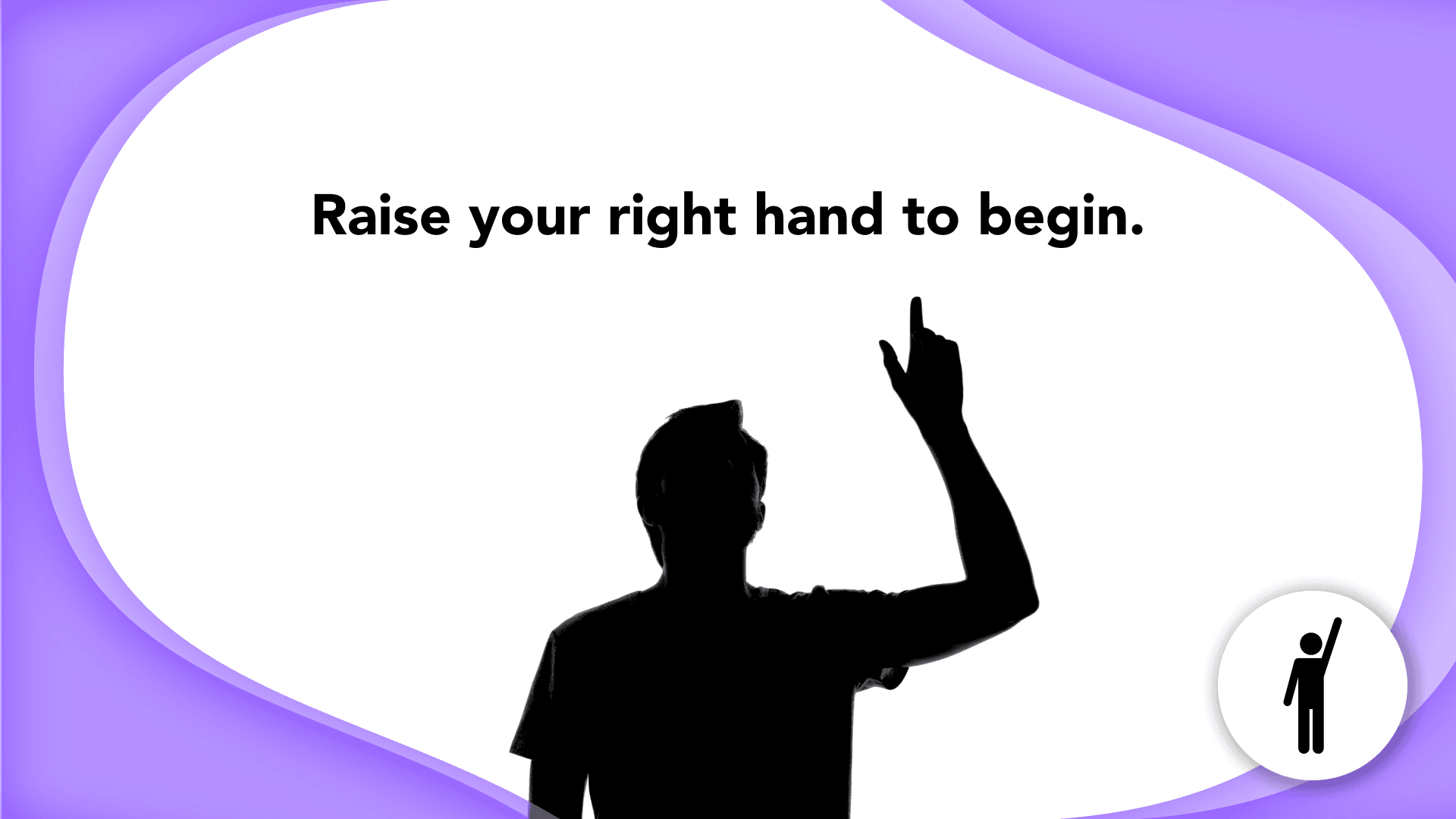
Using engaging and accessible technology, we designed a choose-your-own-adventure style story that a viewer could follow just by raising a left or right hand. Each branch of the story explored a different concern regarding the development of new technology. At the end of the experience, the viewer had the opportunity to scan a QR code to give their opinion to the Rathenau Instituut.